
Navigating the
Complex Policy
Environment
with Confidence
A strategic education proposal for senior to mid-level management and leadership teams to learn how to anticipate, influence, and respond effectively to the forces of government regulation, national & global disruption, and market change.
The Rules of the Game
Have Changed
Global trade is fragmenting. Tariff regimes are shifting faster than supply chains can adjust. Data localisation laws, sectoral licensing requirements, and ESG-linked compliance mandates are affecting boardroom-level decisions. National & global flashpoints — from the Indo-Pacific to Eastern Europe — cascade directly into procurement costs, market access, and strategic partnerships.
In this environment, an organisation's leadership team is interacting with public policy domains, whether they are equipped to do so or not. The question is no longer whether global & national developments will affect your business. The question is whether your leadership team has the strategic confidence, the institutional knowledge, and the analytical vocabulary to act ahead of policy shifts, rather than react to them.
The Takshashila Institution's Post Graduate Programme in Public Policy (PGP) was designed precisely for this moment. We invite you to enrol your executives in India's most rigorous practitioner-focused policy education.
Why Policy Literacy
Is a Competitive Advantage
Executives who understand how governments think build companies that are resilient, proactive, and strategically agile. Those who don't are caught on the back foot.
Executives who want to be ahead of the curve need to learn how to read the national & global policy landscape, not just the trade data. Supply chain rewiring, China+1 strategies, US tariff escalation, and friend-shoring need to be better understood in boardrooms.
The compliance burden has moved from legal teams to the boardroom — from DPDP to PLI schemes, from SEBI disclosures to competition regulation. C-suite executives need to understand it all.
Engagement is no longer optional for executives — it is strategic. Central ministries, state governments, and regulators are now active co-participants in industry strategy and corporates need to leverage these stakeholders better.
Demand curves and competitive dynamics are being re-shaped in ways that MBAs alone cannot equip you for. Fiscal policy, monetary tightening, tax reform, and industrial policy — each needs to be understood better to be able to respond to them better.
"A business leader equipped with policy knowledge is like a general who understands terrain. The battlefield is ever-changing, and its contours affect every aspect of business."
What Your Leaders
Will Gain
Executives learn to decode government decision-making: how legislation moves through Parliament, how ministries set priorities, and how regulatory frameworks are drafted. This transforms your team from reactive bystanders to informed participants in policy dialogue.
From US-China tech decoupling to India's Act East policy and Gulf realignments — participants build a rigorous framework for mapping national & global risk onto strategic decisions, supply chains, and investment planning.
Learn to write policy briefs, engage with regulatory bodies, and articulate industry positions with evidence-based rigour. Executives who can communicate in the language of government build influence that protects — and expands — their licence to operate.
Deep grounding in macroeconomics, public finance, and fiscal federalism equips senior leaders to anticipate interest rate trajectories, budget implications, and state-level incentive structures — before they hit the quarterly earnings call.
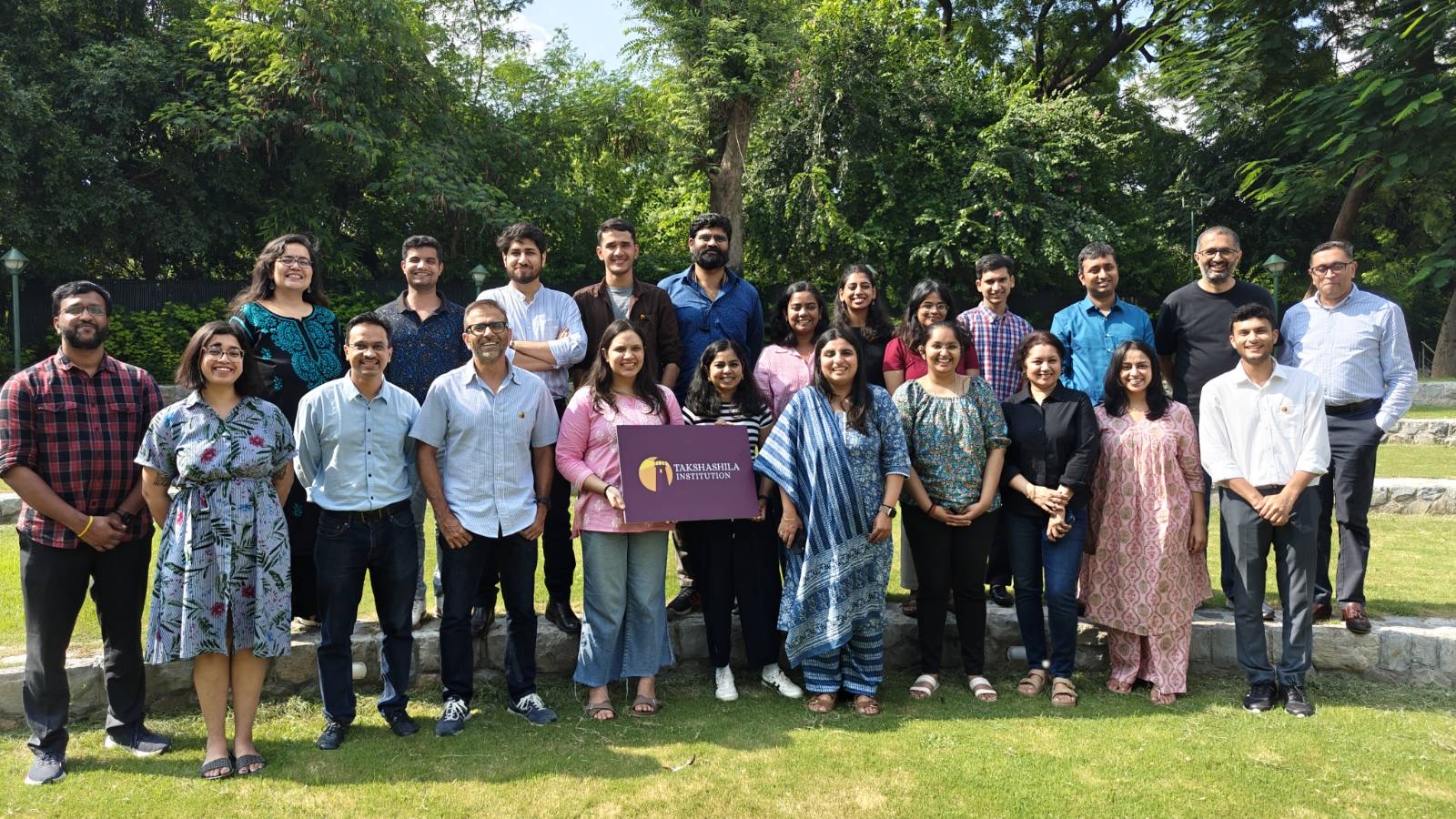
Participants join a cohort of professionals drawn from government, corporate, civil society, and academia — an unparalleled peer network for navigating the India policy ecosystem. Takshashila's alumni community spans stakeholders in the Union and state governments, central institutions, industry bodies and top research institutions.
Select Modules
Spanning three terms across 48 weekends, the PGP is delivered via live & interactive online sessions and three in-person workshops across India.
- Indian economy in global context
- Institutions, jobs & employment policy
- Government revenue, expenditure & subsidies
- Key economic debates of the last decade
- Market failures & government intervention
- Subsidies, price controls, quotas & tariffs
- Public goods and externality
- Behavioural economics for policy design
- Growth cycles & economic fluctuations
- Monetary policy and exchange rate regimes
- Capital controls & the impossible trinity
- Fiscal policy and its business implications
- Economic, national & global impacts of AI
- Frameworks for society's response to tech
- Information, markets & decision-making
- Technology, national power & key sectors
- Accountability & institutional design
- Why good policies fail
- Evidence-based governance tools
- Behavioural approaches to reform
- Outcomes in education & health
- Writing a Policy Brief
- Structuring evidence for policy audiences
- Constructing credible alternatives
- Trade-off analysis for decision makers
- Communicating to Ministers, Secretaries & Boards
- Tax policy and reforms in India
- Fiscal decentralisation & federalism
- Macroeconomics of public finance
- Impact of government spending on industry
- Understanding national & global policy systems
- Tools of statecraft: foreign policy & diplomacy
- Technology's role in reshaping global power
- Supply chain implications of great-power competition
Unique Pedagogy &
Teaching Focus
Our pedagogy is grounded in the Indian policy context and designed for professionals who need practical frameworks, not just theory.
Unique theoretical foundations grounded in the Indian policy landscape — not generic Western frameworks
Analytical tools and frameworks applicable across industries and sectors — from BFSI to manufacturing to tech
Policy writing, simulation exercises, and war games — skills that translate directly to boardroom and regulatory engagement
Engage in policy formulation pertaining to your own industry — learning by doing, not just listening
Taught by
Practitioner-Scholars
A world-class faculty, recognised as India's top strategic affairs thinkers of the next decade.

Architect of Takshashila's strategic curriculum and former policymaker with the Singapore government, he teaches on the geopolitics of the Indo-Pacific, defence economics, and the politics of networked societies.
.JPG)
Former Morgan Stanley, Narayan brings 20+ years on Wall Street including Head of Global EM Investing and India Country Head. Brings markets and macro into policy dialogue.

Chair for our High-Tech Geopolitics Programme, Pranay is the country's foremost thinker on international relations, and public finance across all levels.

Chair for our Indo-Pacific Programme, Manoj is the country's foremost thinker on Chinese politics and India's relationship with its neighbours.
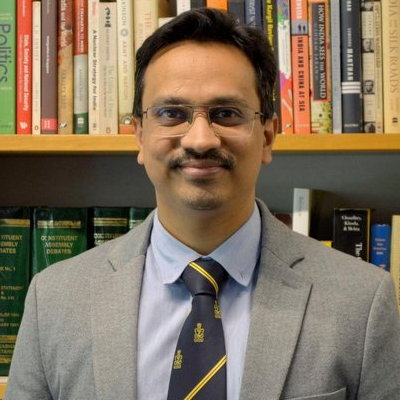
Specialises in platform economics, digital payments, and India's employment challenges. Managing Editor of the Indian Public Policy Review.

Retired Lieutenant General and leading voice on national security strategy, civil-military relations, and India's defence ecosystem.
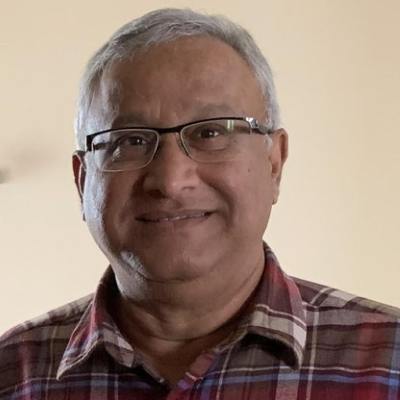
Retired IPS officer (1984 batch) and former Director General of Police, Uttar Pradesh, and Joint Director, CBI. Expert in law enforcement, anti-corruption policy, and security management.
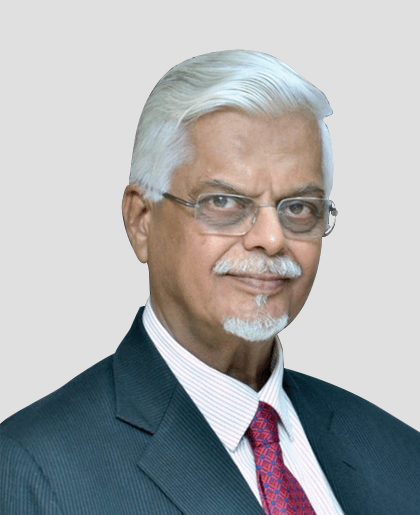
Former Media Advisor and Speechwriter to PM Manmohan Singh. Former Director for Geo-economics and Strategy at the IISS, London. Economist and strategic affairs author.
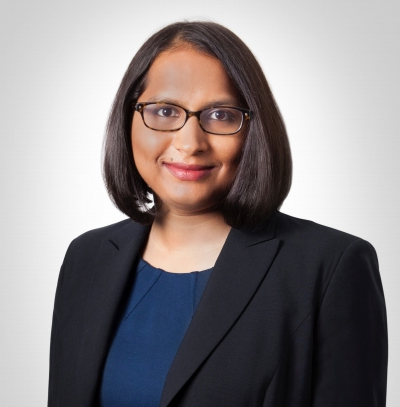
Fellow at the Classical Liberal Institute at NYU School of Law. Leads the India political economy research program and Emergent Ventures India at Mercatus.

Focuses on policy-relevant issues of emerging economies in international finance, monetary policy, banking, economic measurement, and financial markets.
Leaders Who Have
Gone Through the Programme
Our alumni span government, corporate leadership, civil society, and research — a testament to the programme's cross-sectoral impact.
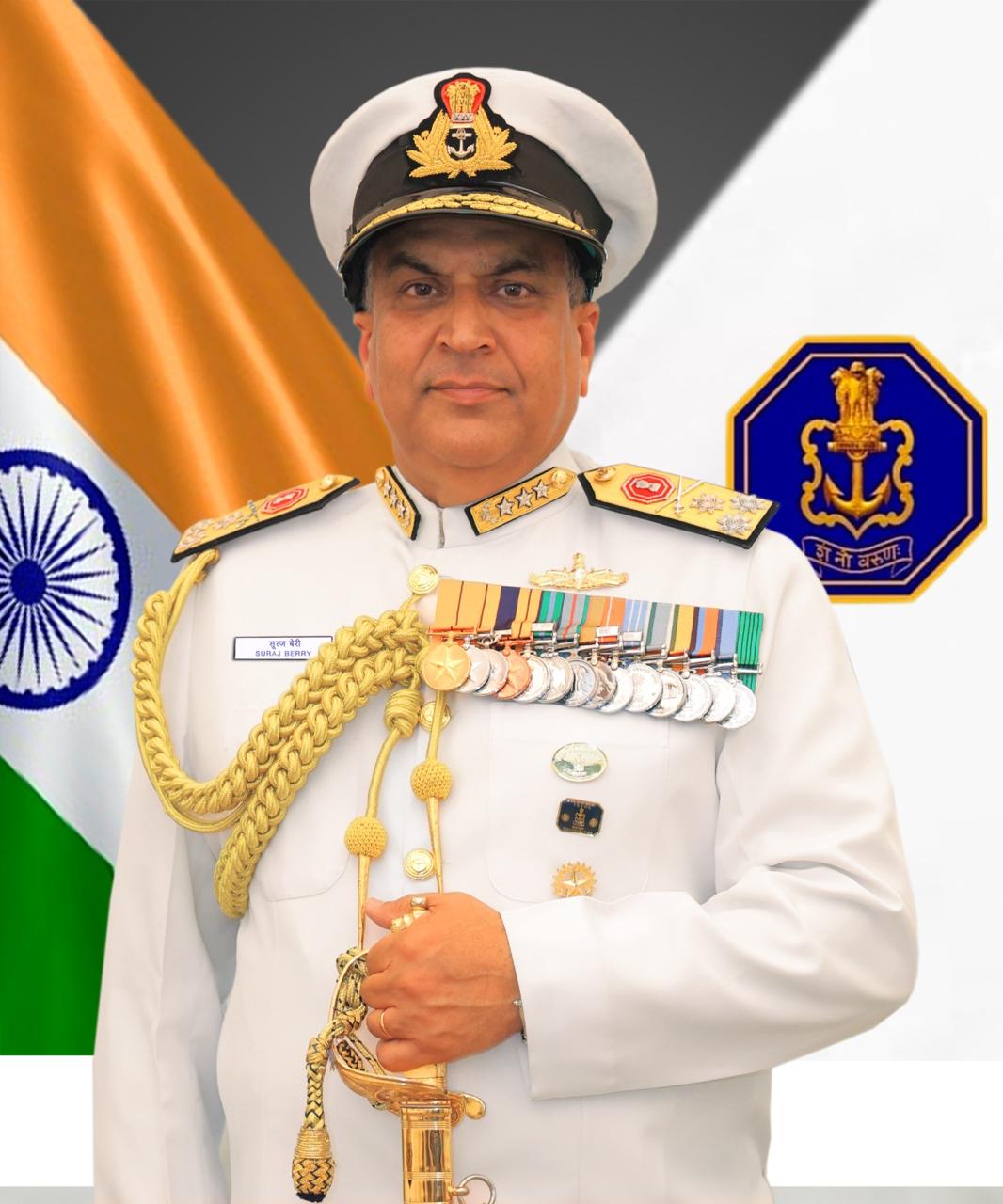
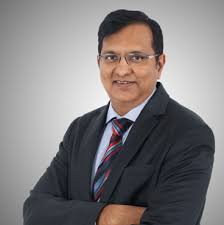
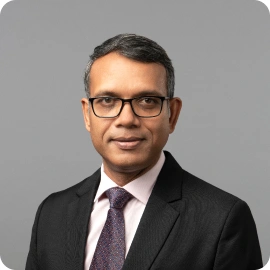


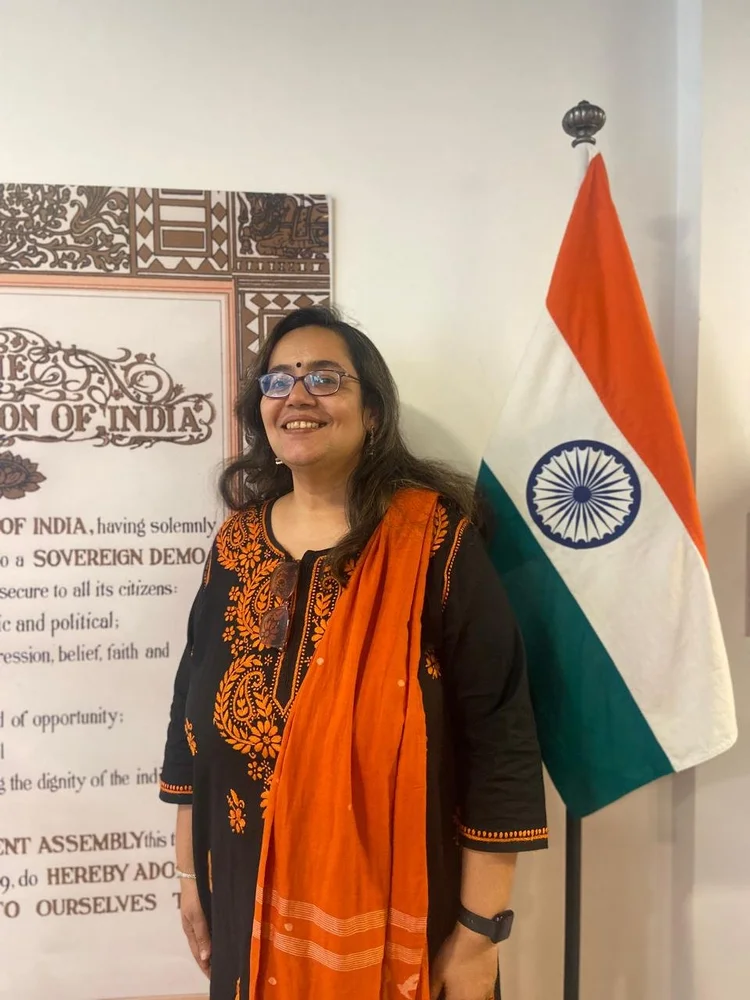
"This programme gave me the language to engage meaningfully with regulators — not just our legal team's checklist, but an actual understanding of why rules are drafted the way they are."
"When tariff changes hit our supply chain last year, I was the only person in the room who could contextualise it. That directly came from Takshashila's geopolitics curriculum."

%20(2).jpg)
Programme Fees and
Key Dates
The PGP is available for individual enrolment and corporate sponsorship. For organisations sponsoring multiple participants, we invite a direct conversation with the Takshashila team regarding customised cohort or partnership arrangements.
Key Dates · June 2026 Cohort
Rolling admissions — early applicants preferred
Live sessions commence for the 10th cohort
In-person immersions in August and October 2026
Participants present their capstone projects at the final in-person workshop
Programme Fee Structure
| Category | Detail | Note |
|---|---|---|
| Programme Fee | ₹1,95,000 + GST per participant | 10th Cohort |
| Duration | 48 weekends · Three academic terms of 14 weeks each | With 2–3 week breaks between terms |
| Format | Hybrid — live & interactive online sessions + 3 in-person workshops | Classes held in IST timezone |
| Programme Commencement | 20 June 2026 · Next cohort | Application deadline: 1 June 2026 |
| Eligibility | Any undergraduate degree; 3+ years work experience | Interview-based selection process |
Start Your Policy Leadership
Journey With Us
Join a network of India's most thoughtful policy practitioners, corporate leaders, and public servants. Enrol now for the June 2026 cohort — or write to us to discuss a corporate partnership.
2nd Floor, 46/1, Cobalt Building, Church Street, Bengaluru – 560001
school.takshashila.org.in/pgp